Spare Lithium Battery Packaging Guidelines
Introduction
Shipping spare lithium batteries internationally requires careful packaging to ensure safety, regulatory compliance, and successful carrier acceptance.
Unlike batteries installed inside electronic equipment, spare lithium batteries are shipped separately from the device they power. This means the battery terminals are directly exposed, increasing the risk of short circuits, physical damage, and safety incidents during transportation.
Proper packaging is essential for protecting the batteries and meeting international air freight requirements.
This guide explains the general packaging procedures for spare lithium batteries, including terminal protection, inner packaging, outer packaging, and shipment preparation.
What Are Spare Lithium Batteries?
Spare lithium batteries refer to batteries transported separately from electronic equipment.
Common examples include:
- Replacement lithium-ion batteries for phones
- Spare laptop batteries
- Replacement drone batteries
- Standalone lithium battery packs
- Extra rechargeable battery units
Typical examples include:
- Lithium-ion batteries shipped alone (UN3480)
- Lithium metal batteries shipped alone (UN3090)
Because these batteries are not installed inside equipment, additional protection is required to prevent accidental activation, short circuits, and physical damage.
Why Spare Lithium Batteries Require Special Packaging
Spare batteries have exposed electrical contacts that can easily come into contact with:
- Other batteries
- Metal objects
- Conductive materials
- Packaging materials containing metal components
A short circuit may generate heat and potentially lead to battery failure or thermal runaway.
Proper packaging should achieve three main objectives:
- Prevent electrical contact
- Protect batteries from physical damage
- Keep batteries securely positioned during transportation
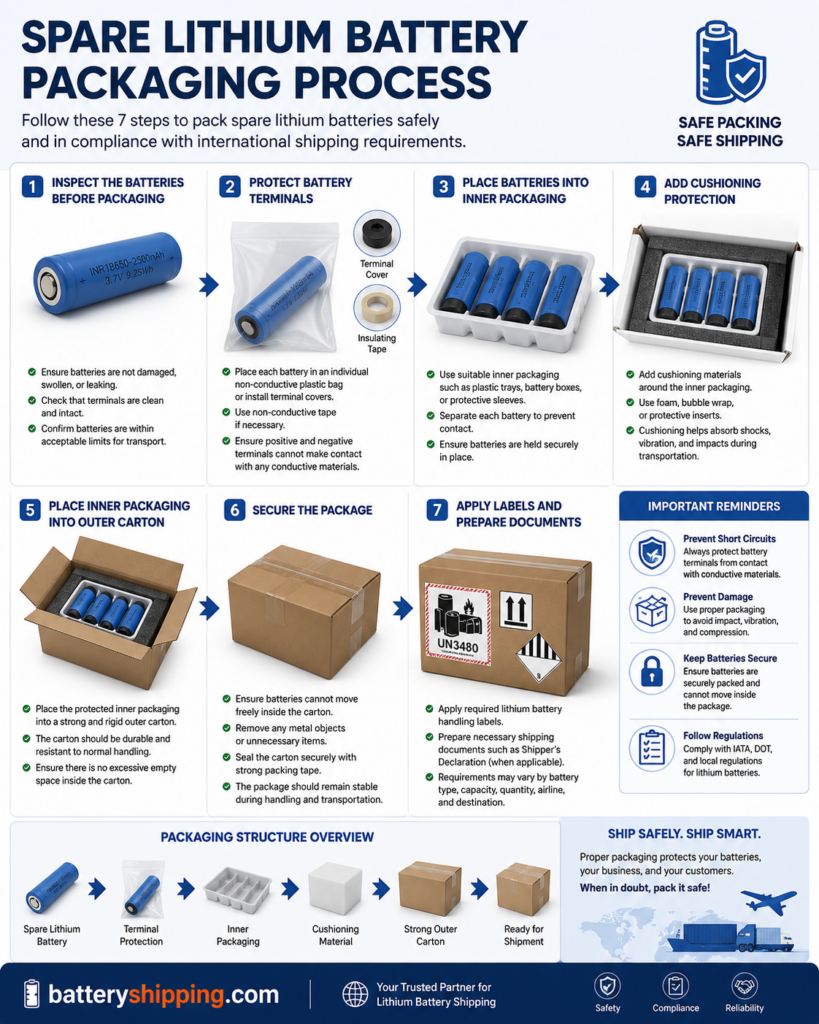
Spare Lithium Battery Packaging Process
Step 1: Inspect the Batteries Before Packaging
Before packing, each battery should be checked carefully.
Confirm that:
- The battery casing is not damaged
- There are no signs of swelling or leakage
- The terminals are clean and intact
- The battery is within acceptable transportation limits
Damaged or defective batteries should not be shipped through normal transportation channels.
Step 2: Protect Battery Terminals
The first packaging step is preventing accidental contact with battery terminals.
Recommended methods include:
Method 1: Individual Plastic Bags
Place each battery into a separate non-conductive plastic bag.
Advantages:
- Prevents contact between batteries
- Provides basic protection against contamination
- Easy for inspection
Method 2: Terminal Covers
Install protective caps or covers over exposed terminals.
Advantages:
- Provides direct terminal protection
- Reduces short-circuit risk
Method 3: Insulating Tape
Apply non-conductive tape over exposed contacts when appropriate.
The goal is to ensure that the positive and negative terminals cannot contact conductive materials.
Step 3: Place Batteries Into Inner Packaging
After terminal protection, batteries should be secured inside suitable inner packaging.
The inner packaging should:
- Prevent battery movement
- Separate individual batteries when required
- Provide protection against impact
Common inner packaging materials include:
- Plastic trays
- Battery boxes
- Foam inserts
- Protective sleeves
A properly packed battery should remain fixed in position when the package is moved.
Step 4: Add Cushioning Protection
Cushioning materials should be added around the inner packaging when necessary.
Suitable materials include:
- Foam padding
- Bubble wrap
- Protective inserts
Cushioning helps reduce damage caused by:
- Drops
- Vibration
- Compression during transportation
However, cushioning materials should not replace proper terminal protection.
Step 5: Place Inner Packaging Into Outer Carton
The protected batteries should then be placed into a strong outer packaging.
The outer carton should:
- Be rigid and durable
- Prevent deformation during handling
- Maintain the position of the inner packages
The general packaging structure is:
Spare Lithium Battery → Terminal Protection → Inner Packaging → Cushioning Material → Strong Outer Carton
Step 6: Secure the Package
Before closing the carton:
Check that:
- Batteries cannot move freely inside
- No metal objects are inside the package
- Packaging materials fully protect the batteries
- The carton can withstand normal transportation handling
After sealing, the package should remain stable during movement.
Step 7: Apply Required Labels and Documentation
Depending on battery specifications and shipping method, spare lithium battery shipments may require:
- Lithium battery handling labels
- Dangerous goods labels
- Shipper’s declaration (when applicable)
- Battery test documentation
Requirements may vary based on:
- Battery type
- Watt-hour rating
- Quantity
- Airline
- Destination country
Always confirm current requirements before shipment.
Common Spare Lithium Battery Packaging Mistakes
Shipping Batteries Without Terminal Protection
Exposed terminals create a significant short-circuit risk.
Mixing Multiple Batteries Together
Loose batteries may contact each other during transportation.
Using Weak Packaging
Thin cartons may not provide enough protection during international handling.
Adding Unnecessary Metal Materials
Metal components can create electrical contact risks.
Using Incorrect Packaging Standards
Different battery categories may have different packaging requirements.
Spare Battery Packaging vs Other Battery Products
Spare Lithium Batteries
Main concern:
- Exposed terminals
- Direct battery protection
- Short-circuit prevention
Power Banks
Main concern:
- Battery contained inside equipment
- Protection against accidental activation
Mobile Phones
Main concern:
- Protecting the device and installed battery
Each product category requires a different packaging approach.
Professional Spare Lithium Battery Shipping Support
Preparing spare lithium batteries for international shipment requires knowledge of battery classification, packaging standards, and carrier requirements.
At batteryshipping.com, we help businesses arrange international transportation solutions for lithium batteries, including packaging guidance, air freight coordination, and dangerous goods shipping support.
Related Battery Packaging Guides
- Battery Packaging Guidelines
- Power Bank Packaging Guidelines
- Phone Battery Packaging Guidelines
- Lithium Battery Pack Packaging Guidelines
- Battery-Powered Equipment Packaging Guidelines