Lithium Battery Pack Packaging Guidelines
Introduction
Lithium battery packs are widely used in consumer electronics, industrial equipment, medical devices, electric mobility products, and energy storage systems. Because battery packs often contain multiple lithium-ion cells connected together, proper packaging is essential to ensure safe transportation and compliance with international shipping regulations.
Unlike individual battery cells, lithium battery packs are generally larger, heavier, and more susceptible to damage if improperly handled. Appropriate packaging helps prevent movement, impact, short circuits, and other transportation risks.
This guide outlines the general packaging process for lithium battery packs shipped by air, sea, or express courier.
What Is a Lithium Battery Pack?
A lithium battery pack consists of multiple lithium-ion cells assembled into a single rechargeable power source.
Common examples include:
- E-bike battery packs
- Drone battery packs
- Portable power station batteries
- Medical equipment battery packs
- Industrial battery modules
- Robotics battery packs
- UPS battery packs
- Electric tool battery packs
Battery packs vary significantly in size, capacity, and design, so packaging methods may differ depending on the product and transportation requirements.
Why Proper Battery Pack Packaging Is Important
Battery packs contain large amounts of stored electrical energy and may be exposed to vibration, compression, and impact during transportation.
Proper packaging helps to:
- Prevent physical damage
- Protect battery terminals
- Reduce movement inside the package
- Minimize short-circuit risks
- Improve shipment acceptance by airlines and logistics providers
- Comply with international dangerous goods regulations
Safe packaging protects both the shipment and everyone involved in transportation.
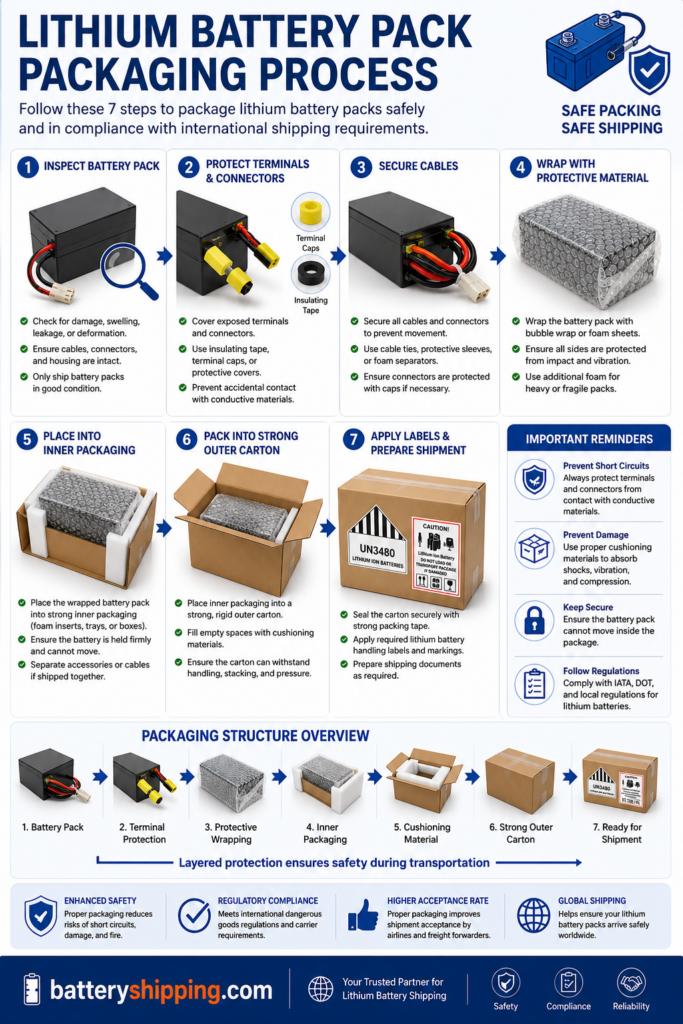
Lithium Battery Pack Packaging Process
Step 1: Inspect the Battery Pack
Before packaging, carefully inspect every battery pack.
Check for:
- Cracked housing
- Swelling
- Leakage
- Loose connectors
- Damaged cables
- Signs of overheating
Only batteries in good condition should be prepared for shipment.
Step 2: Protect Battery Terminals and Connectors
All exposed electrical terminals and connectors should be insulated before packaging.
Common protection methods include:
- Non-conductive insulating tape
- Protective terminal caps
- Plastic connector covers
- Individual protective bags
This prevents accidental contact with conductive materials during transport.
Step 3: Secure Cables and Accessories
If the battery pack includes cables or connectors, they should be secured before packaging.
Recommended methods include:
- Cable ties
- Protective sleeves
- Foam separators
- Connector caps
Loose cables should never move freely inside the package.
Step 4: Wrap the Battery Pack
The battery pack should be wrapped with protective materials before placing it into the shipping carton.
Suitable materials include:
- Bubble wrap
- Foam sheets
- Protective foam corners
- Air cushion film
The goal is to absorb shocks and reduce vibration throughout transportation.
Step 5: Place Into Strong Inner Packaging
After wrapping, place the battery pack into secure inner packaging.
The inner packaging should:
- Hold the battery firmly
- Prevent movement
- Separate the battery from accessories
- Support the battery’s weight
Heavy battery packs may require molded foam inserts or custom trays.
Step 6: Pack Into a Strong Outer Carton
Place the protected battery pack into a durable outer carton.
The outer packaging should:
- Be rigid and impact-resistant
- Support the total shipment weight
- Prevent crushing during transportation
- Maintain structural integrity throughout handling
Fill empty spaces with cushioning materials to eliminate movement.
Step 7: Seal and Label the Package
After confirming the package is secure:
- Seal the carton with strong packing tape
- Apply required lithium battery labels
- Attach dangerous goods markings when applicable
- Prepare shipping documentation if required
Labeling requirements depend on:
- Battery type
- Watt-hour rating
- Quantity
- Transport mode
- Destination country
Recommended Packaging Materials
High-quality packaging materials significantly improve shipment safety.
Recommended materials include:
Insulating Materials
- Terminal caps
- Electrical insulating tape
- Plastic protective bags
Cushioning Materials
- Foam inserts
- Bubble wrap
- EVA foam
- Air cushions
Outer Packaging
- Double-wall corrugated cartons
- Heavy-duty rigid boxes
- UN specification packaging (when required)
Common Packaging Mistakes
Leaving Connectors Exposed
Exposed terminals increase the risk of accidental short circuits.
Insufficient Cushioning
Heavy battery packs can shift during transportation if not properly supported.
Weak Outer Cartons
Battery packs are often heavier than ordinary consumer products and require stronger packaging.
Empty Space Inside the Carton
Movement inside the carton increases the likelihood of impact damage.
Shipping Damaged Battery Packs
Damaged lithium battery packs should never be shipped through standard transportation channels.
Packaging Structure Overview
A typical lithium battery pack shipment follows this packaging sequence:
Lithium Battery Pack → Terminal Protection → Protective Wrapping → Inner Packaging → Cushioning Material → Strong Outer Carton → Shipping Labels
This layered packaging system minimizes movement, absorbs shocks, and helps ensure safe transportation.
Battery Pack Packaging vs Other Battery Products
Battery Packs
Primary concern:
- Large size and higher weight
- Multiple connected cells
- Connector protection
- Structural support
Spare Batteries
Primary concern:
- Individual battery protection
- Terminal insulation
- Short-circuit prevention
Batteries Installed in Equipment
Primary concern:
- Device protection
- Prevent accidental activation
- Secure equipment inside the package
Different battery products require different packaging approaches depending on their construction and transportation risks.
Professional Battery Pack Shipping Support
International shipment of lithium battery packs requires proper packaging, documentation, and route planning.
At batteryshipping.com, we assist businesses with battery pack shipping solutions, including packaging guidance, dangerous goods handling, and international air freight arrangements for a wide range of lithium battery products.
Related Packaging Guides
- Battery Packaging Guidelines
- Spare Lithium Battery Packaging Guidelines
- Power Bank Packaging Guidelines
- Phone Packaging Guidelines
- Battery-Powered Equipment Packaging Guidelines