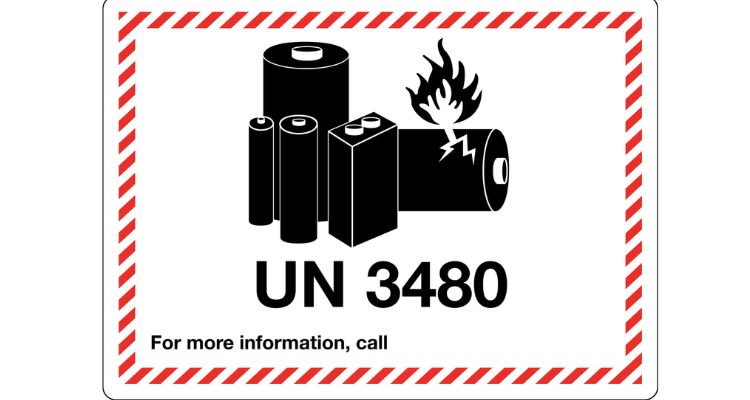
Lithium-ion batteries are widely used in electric vehicles, energy storage systems, consumer electronics, medical devices, drones, and industrial equipment. When these batteries are shipped separately — not installed in equipment — they are classified as UN3480 Lithium Ion Batteries, one of the most strictly regulated dangerous goods categories in international transportation.
At BatteryShipping.com, we specialize in compliant international battery logistics and dangerous goods transportation. This guide explains the key UN3480 shipping requirements based on current regulations from IATA, UPS, FedEx, and DHL.
What Is UN3480?
UN3480 refers to:
Lithium Ion Batteries shipped by themselves (not packed with or contained in equipment).
This classification includes:
- Rechargeable lithium-ion batteries
- Lithium polymer batteries
- Power banks
- EV battery modules
- Energy storage batteries
- Industrial lithium battery packs
UN3480 is classified as:
- Class 9 Dangerous Goods
- Subject to strict air transport restrictions
- Regulated under IATA Dangerous Goods Regulations (DGR)
Why UN3480 Batteries Are Highly Regulated
Lithium-ion batteries can generate intense heat, catch fire, or explode if:
- Damaged
- Improperly packaged
- Short-circuited
- Overcharged
- Exposed to extreme temperatures
Because thermal runaway incidents on aircraft can be catastrophic, airlines and couriers impose strict transport requirements for UN3480 shipments.
UN3480 Packaging Requirements
1. Use Strong Outer Packaging
UN3480 batteries must be packed in:
- Strong rigid outer cartons
- UN-certified packaging for fully regulated shipments
- Packaging capable of passing drop and stacking tests
Most carriers require packaging compliant with:
- IATA Packing Instruction PI965
- UN38.3 tested batteries
2. Prevent Short Circuits
Battery terminals must be protected by:
- Non-conductive caps
- Individual plastic bags
- Blister trays
- Terminal taping
Batteries must not contact:
- Metal objects
- Other batteries
- Conductive surfaces
Improper terminal protection is one of the most common reasons for shipment rejection.
3. Internal Protection Against Movement
The batteries inside the carton must be secured using:
- Foam inserts
- Corrugated dividers
- Bubble cushioning
- Molded trays
Movement during transport can damage cells and increase fire risk.
State of Charge (SoC) Requirement
For air transport, UN3480 lithium-ion batteries must generally be shipped at:
Maximum 30% State of Charge (SoC)
This requirement applies under IATA PI965 Section IA and IB.
Shippers may need special approval for batteries exceeding 30% SoC.
UN38.3 Test Requirement
All lithium-ion batteries transported internationally must comply with:
UN Manual of Tests and Criteria, Part III, Sub-section 38.3
This includes testing for:
- Altitude simulation
- Thermal testing
- Vibration
- Shock
- External short circuit
- Impact/crush
- Overcharge
- Forced discharge
Without UN38.3 test reports, many carriers will refuse shipment entirely.
Required Labels and Marks for UN3480
UN3480 shipments normally require:
Mandatory Labels
- Class 9 Lithium Battery Label
- Cargo Aircraft Only (CAO) Label
- UN3480 Marking
- Handling labels where applicable
The labels must be visible, durable, and properly sized according to IATA regulations.
Required Shipping Documents
Depending on battery type, quantity, and packing instruction, documents may include:
Common Documentation
- Shipper’s Declaration for Dangerous Goods (DGD)
- Air Waybill (AWB)
- MSDS/SDS
- UN38.3 Test Summary
- Packing List
- Commercial Invoice
Fully regulated shipments require trained dangerous goods personnel to prepare documentation.
IATA PI965 Sections Explained
UN3480 air shipments are usually transported under:
| Section | Description | Regulation Level |
|---|---|---|
| Section IA | Fully regulated large batteries | Highest |
| Section IB | Small batteries but still regulated | Medium |
| Section II | Mostly phased out/restricted for standalone batteries | Limited |
Many airlines no longer accept standalone UN3480 Section II shipments because of safety concerns.
UPS UN3480 Shipping Requirements
UPS Lithium Battery Shipping Information
UPS requires:
- Approved dangerous goods account
- Proper dangerous goods training
- UN-compliant packaging
- Correct labeling and documentation
- Compliance with IATA and ICAO rules
UPS may restrict:
- Damaged batteries
- Recalled batteries
- Prototype batteries
- Large standalone lithium battery shipments
UPS also applies additional operational restrictions depending on destination country and service type.
FedEx UN3480 Shipping Requirements
FedEx Lithium Battery Shipping Guide
FedEx states that:
- UN3480 batteries are fully regulated dangerous goods
- Many shipments require dangerous goods contracts
- Packages must use rigid outer packaging
- Batteries exceeding 35kg require special arrangements
- Defective or recalled batteries are prohibited
FedEx also follows IATA PI965 requirements and operator variations.
DHL UN3480 Shipping Requirements
DHL Express generally requires:
- Dangerous goods approval
- Pre-approved shipper accounts
- Certified packaging
- IATA-compliant labeling
- DG-trained staff
Some DHL services restrict standalone UN3480 batteries entirely or only allow them under cargo aircraft conditions.
Carrier acceptance often depends on:
- Battery watt-hour rating
- Quantity per package
- Route availability
- Airline restrictions
Common Reasons UN3480 Shipments Are Rejected
The most frequent problems include:
- Missing UN38.3 reports
- Incorrect labels
- SoC above 30%
- Weak packaging
- Missing dangerous goods declaration
- Improper battery classification
- Mixed dangerous goods incompatibility
- Damaged batteries
Even experienced exporters frequently encounter delays due to documentation or packaging errors.
Air Freight vs Sea Freight for UN3480
| Method | Advantages | Limitations |
|---|---|---|
| Air Freight | Faster transit | Strict regulations and higher cost |
| Sea Freight | Lower cost for large batteries | Longer transit time |
| Road Freight | Flexible regional transport | ADR compliance required in Europe |
Large energy storage batteries and EV battery packs are increasingly transported by sea due to air cargo restrictions.
Professional UN3480 Shipping Support
International lithium battery shipping is highly technical. Requirements may vary depending on:
- Battery chemistry
- Watt-hour rating
- Net weight
- Packaging configuration
- Destination country
- Airline policy
- Courier operator variations
At BatteryShipping.com, we help customers manage:
- UN3480 battery shipping
- DG packaging solutions
- Air freight and sea freight
- Dangerous goods documentation
- UN38.3 compliance support
- Global battery logistics
Whether you are shipping small lithium battery packs or large industrial energy storage systems, compliant transportation is critical for safety, customs clearance, and successful delivery.
References
IATA
FedEx
UPS
DHL
Contact Details
Speak with our logistics team about battery cargo requirements, shipping routes, transit options, and quotation support. We are available for business inquiries by phone, email, and WhatsApp.
Add Our Wechat